




For most first-time visitors, the best time to visit Morocco is from March to May or from late September to November. These periods usually provide the most comfortable balance for exploring imperial cities, crossing the Atlas Mountains and visiting the desert. Choose summer for the Atlantic coast, winter for southern Morocco and mild city breaks, and late spring through early autumn for higher-altitude trekking.
For most first-time visitors, the best time to visit Morocco is spring—especially March to May—or autumn, from late September through November. These periods generally offer the most useful balance of comfortable sightseeing weather, manageable conditions in the desert and practical travel across the Atlas Mountains. However, Morocco is not a one-climate destination: Marrakech can be intensely hot while Essaouira is cool and windy, and a sunny day near the Sahara can be followed by a cold desert night.
Your ideal dates therefore depend on your route. If you want Marrakech, Fez, the Atlas Mountains and the Sahara in one trip, aim for April, May, October or early November. For an Atlantic beach holiday, June to September can work well. For a quieter cultural trip focused on cities and southern valleys, December to February may be a good choice if you pack for cold evenings and accept the possibility of rain or mountain disruption.
Why the best time to visit Morocco depends on your route
Morocco’s geography creates several distinct travel environments. The Atlantic Ocean moderates temperatures in coastal places such as Casablanca, Essaouira, Rabat and Agadir. Inland cities, including Marrakech and Fez, experience greater temperature swings and hotter summer afternoons. The Rif and Atlas ranges add altitude, snow and rapidly changing mountain conditions, while southeastern Morocco is arid and exposed to stronger differences between daytime and nighttime temperatures.
Most of Morocco’s rain falls between October and April, although rainfall varies considerably by region. Northern Morocco is generally wetter than the south, summer precipitation is limited across much of the country, and snow can affect mountainous areas during the colder months. Weather patterns are increasingly variable, so historical averages should guide your planning rather than be treated as a forecast.
A useful first step is to identify the most demanding environment in your itinerary. If the Sahara is your priority, avoid building the trip around peak summer. If you want a multi-day High Atlas trek, research the specific trail and altitude rather than relying on conditions in Marrakech. If your main goal is surfing, beach time or a relaxed coastal stay, summer may be entirely suitable even though it is uncomfortable for long inland sightseeing days.
Morocco by season: what each period is really like
Spring: March to May
Spring is one of the strongest all-round choices for a first visit. Marrakech, Fez, Meknes and Rabat are usually more comfortable to explore than in midsummer, while southern routes through Ouarzazate, the Drâa Valley and the desert are generally more practical than during periods of extreme heat. Landscapes can also appear greener after winter rainfall, particularly in agricultural areas and mountain valleys.
Conditions are not uniform. March can still bring rain, chilly evenings and snow at altitude. By May, inland heat may become significant, especially during an unusually hot spell. Pack layers rather than assuming every day will be warm: a light waterproof shell, sun protection and a warmer evening layer are useful on routes that combine coast, mountains and desert.
Spring demand often increases around school holidays and popular travel weeks. Reserve well-located riads, desert camps and specialist mountain guides in advance if your dates are fixed. Build flexibility into mountain drives because rain, snowmelt or road works can affect journey times through passes and valleys.
Summer: June to August
Summer is best approached regionally. Inland cities and the southeast can become extremely hot, making full-day medina walks, exposed archaeological sites and long desert transfers tiring. In Marrakech or Fez, plan important outdoor visits soon after breakfast, rest during the hottest part of the afternoon and return to the medina in the evening. Confirm that your accommodation has effective air-conditioning if this matters to you; a courtyard pool does not necessarily cool bedrooms.
The Atlantic coast is a better summer fit. Essaouira is known for cooling winds and can feel considerably fresher than Marrakech, while Agadir and nearby coastal resorts offer a beach-oriented alternative to an intensive city itinerary. Bring a light jacket for breezy evenings, particularly in Essaouira. Coastal fog and wind can occur, so summer does not guarantee still, cloudless beach weather.
Mountain areas may offer relief from lowland heat, but strong sun, limited shade, dehydration and afternoon weather changes remain important considerations. Start walks early, carry more water than you expect to need and use a qualified local guide for unfamiliar or remote routes. Peak summer is generally not the best time for a first Sahara overnight, especially for travelers sensitive to heat.
Autumn: September to November
Autumn rivals spring as the most versatile season. Late September and October are particularly useful for itineraries combining cities, kasbah routes and the Sahara. Inland temperatures commonly become easier to manage as the season progresses, while the Atlantic coast may remain pleasant enough for outdoor meals and beach walks.
September can still feel like summer in Marrakech and southeastern Morocco, so do not choose it solely because the calendar says autumn. November brings shorter days, cooler nights and a greater chance of rain in northern and central regions. Desert evenings can become cold, and an early sunset reduces the time available for outdoor stops during long transfer days.
Autumn works well for travelers who want variety: medina visits in Fez, food experiences in Marrakech, a High Atlas day trip and a desert route can fit into one journey without the most severe summer heat. Pack for temperature changes and avoid overloading driving days, particularly once daylight hours shorten.
Winter: December to February
Winter can be rewarding for a city-and-south itinerary. Daytime sightseeing in Marrakech, Taroudant, Agadir, Ouarzazate and the desert regions may be comfortable when skies are clear. Visitor pressure may also be lower outside Christmas, New Year and other popular holiday periods. This can make winter attractive to travelers who prefer quieter mornings and do not need guaranteed pool weather.
The main mistake is assuming Morocco is warm everywhere throughout winter. Riads are often designed around open courtyards, and historic buildings may feel cold after sunset. Ask whether rooms have reliable heating, not simply whether the property is open year-round. Pack warm sleepwear and a proper insulating layer for desert camps, mountain villages and pre-sunrise activities.
Rain is more likely during the colder part of the year, especially toward northern Morocco. Snow and ice can affect higher Atlas routes, and mountain trekking may require winter equipment, specialist guidance or a different itinerary. Keep a weather-dependent alternative available rather than treating a high pass, summit or remote road as guaranteed.
The best months for Morocco’s main regions
| Region or experience | Strongest periods | Main trade-off |
|---|---|---|
| Marrakech and inland cities | March–May; October–November | Summer afternoons can be extremely hot; winter evenings may be cold. |
| Fez, Meknes and northern imperial routes | April–May; September–October | Winter can be wet and chilly; summer heat can make medina walking tiring. |
| Atlantic coast and Essaouira | May–October | Wind and coastal cloud can make conditions cooler than expected. |
| Agadir and the southern Atlantic coast | Much of the year | Ocean conditions and breezes vary; inland excursions can still be hot. |
| High Atlas trekking | Late spring to early autumn, depending on altitude | High routes may retain snow outside summer and require specialist equipment. |
| Sahara and southeastern Morocco | March–April; October–November | Summer heat can be severe, while winter nights may be very cold. |
| Chefchaouen and the Rif | April–June; September–October | The north is generally wetter in winter; summer days can become busy. |
These ranges are planning guidelines, not weather guarantees. Elevation, wind, rainfall and heat waves can change the experience within the same month. Check a reliable short-range forecast for every overnight base shortly before departure, especially when your route includes mountains or the desert.
How Ramadan and public holidays affect a Morocco trip
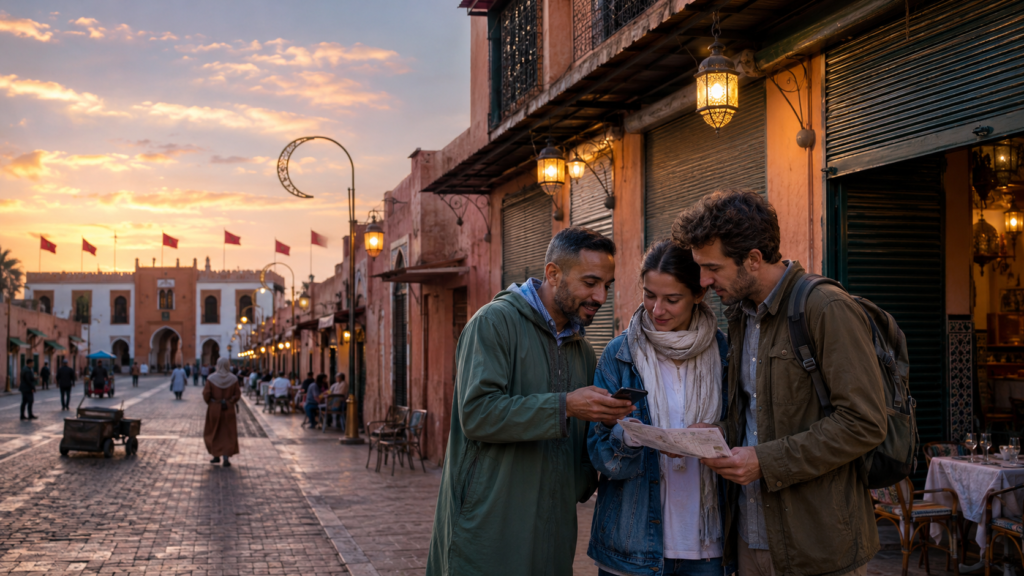
Ramadan can be a meaningful time to visit, but the daily rhythm changes. Many Moroccans fast from dawn until sunset, and some cafés, shops and attractions may operate shorter or adjusted hours. Tourist-oriented hotels and restaurants frequently continue serving visitors, but availability varies by place. Around sunset, streets may become quiet as people gather for iftar, the meal that breaks the fast; later in the evening, public spaces can become lively again.
Travel respectfully by avoiding conspicuous eating, drinking or smoking in public during daylight fasting hours. Follow local guidance, dress considerately and expect traffic to become less predictable shortly before sunset. Your hotel or guide can explain local arrangements and help identify suitable daytime dining options.
Ramadan follows the lunar calendar and moves earlier each solar year. For travelers planning 2027, its beginning is tentatively expected around February 8, but the final date depends on lunar observation and should be reconfirmed. Eid al-Fitr, at the end of Ramadan, can bring family travel, business closures and altered transport patterns. Other national and religious holidays may have similar effects, so verify the calendar before booking critical transfers.
How to choose dates for your travel style
For a classic first-time circuit
Choose April, May, October or early November for a route connecting Marrakech or Casablanca with Fez, the Atlas Mountains and southeastern Morocco. Allow at least ten days if you want both Fez and a Sahara-area stay without turning the journey into consecutive long drives. Morocco is larger and slower to cross than many first-time visitors expect.
For desert landscapes
Prioritize March, April, October or November. Ask exactly where a camp is located, how long the off-road transfer takes and whether private bathrooms, heating or cooling are available. “Luxury” is not a standardized category. Even in a comfortable camp, expect sand, temperature variation and a remote setting.
For hiking
Match the month to the route’s altitude. Lower valleys may become hot in summer, while high passes can hold snow in spring. A Mount Toubkal itinerary is different from a village walk in the Ourika, Aït Bouguemez or Imlil area. Use a qualified guide, discuss fitness honestly and confirm current trail, accommodation and equipment requirements.
For food and cultural immersion
Spring and autumn support long medina days, market visits and cooking activities without relying as heavily on midday rest. Remember that market schedules, weekly souks and family-run businesses follow local routines rather than a single nationwide timetable. Ask before photographing people, request permission inside workshops and avoid presenting active places of work as staged attractions.
For lower-cost flexibility
Consider winter outside major holiday weeks or the edges of spring and autumn. Prices depend on city, events, flight market and accommodation type, so no month is universally cheapest. Compare the total itinerary rather than the nightly room rate: a low-cost stay can be offset by private transfers, heating needs or weather-related changes.
Practical planning advice for every season
- Use layers: Morocco’s day-to-night range can be substantial, particularly inland, in the mountains and near the desert.
- Do not rely on countrywide forecasts: Check Marrakech, your mountain stop, the desert gateway and the coast separately.
- Protect yourself from the sun: Carry a hat, water, sunglasses and high-SPF sunscreen even outside summer. Winter sun can still be strong.
- Confirm climate control: Ask specifically about bedroom heating or air-conditioning. Traditional architecture is atmospheric but comfort varies.
- Schedule around heat: In hot months, visit monuments and markets early, take a midday break and reserve evening time for squares, gardens and dining.
- Leave road buffers: Mountain conditions, urban traffic and frequent scenic stops make tightly timed transfers risky.
- Pack respectfully: Lightweight, loose clothing that covers shoulders and knees is practical for sun protection and helps visitors move comfortably through conservative communities and religious settings.
- Verify seasonal services: Confirm camp access, mountain lodging, guides, attraction hours and transport shortly before travel.
There is no single perfect month for every Moroccan destination. The most reliable strategy is to choose the experience you value most, use spring or autumn as a starting point, and shape the route around regional conditions. A customizable itinerary can then balance city time, coast, mountains and desert without forcing every landscape into the wrong season.
Frequently asked questions
What is the single best month to visit Morocco?
October is one of the strongest all-round choices for a first visit because it often suits city sightseeing, Atlas crossings and desert travel. April and May are similarly versatile. No month is ideal everywhere, however: October may still be warm inland, while mountain and coastal conditions can differ substantially from Marrakech.
When is Morocco too hot for sightseeing?
July and August are usually the most challenging months for long sightseeing days in Marrakech, Fez and southeastern Morocco. Extreme heat is possible outside those months too. If summer is your only option, prioritize the Atlantic coast, book reliable air-conditioning, begin outdoor visits early and avoid scheduling demanding desert activities in the afternoon.
Is Morocco worth visiting in winter?
Yes. Winter can suit Marrakech, Agadir, Ouarzazate and southern routes, particularly for travelers who prefer cooler sightseeing conditions. Prepare for cold nights, occasional rain and possible snow disruption in the Atlas Mountains. Confirm that your riad or hotel has effective heating, especially in historic buildings.
What is the best time to visit the Moroccan desert?
March, April, October and November are generally the most practical months for the Sahara and southeastern Morocco. Daytime conditions are usually more manageable than in summer, although nights can still be cold. Winter is possible with warm clothing; peak summer is difficult because of severe heat and limited shade.
Should first-time visitors avoid Morocco during Ramadan?
Not necessarily. Ramadan offers a distinctive cultural atmosphere, especially after sunset, but business hours and meal routines may change. Visitors should avoid conspicuous daytime eating, drinking or smoking in public, verify attraction and restaurant hours, and allow extra care around traffic before sunset. Religious dates must be reconfirmed because they follow the lunar calendar.
How many days do first-time visitors need in Morocco?
Seven days can cover one city and a nearby region, but ten to fourteen days is more realistic for a route combining Marrakech, Fez, the Atlas Mountains and southeastern Morocco. Shorter desert circuits often involve very long drives. Choosing fewer bases usually creates a better trip than trying to see the entire country in one week.